
Skip to content
Free Shipping On All Orders

Concrete Vapor Barrier

$1,066.75


FREE SHIPPING
SKU SW15-14-I

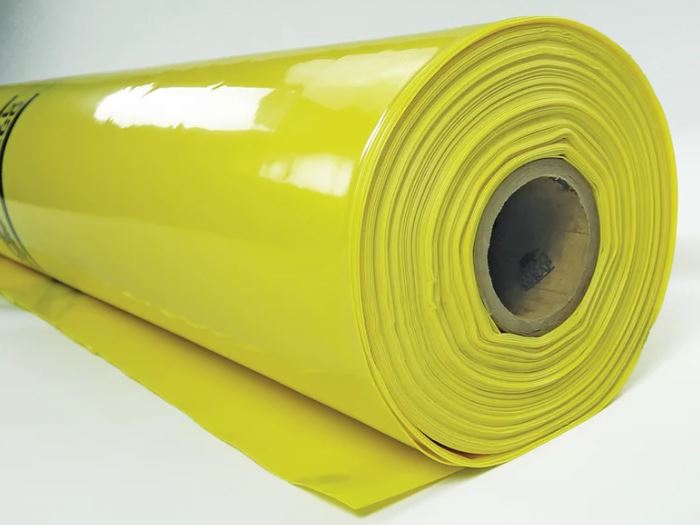
The Concrete Vapor Barrier is a high-performance, multi-layer plastic extrusion made from top-grade virgin polyolefin resins. This below-slab barrier is designed to exceed ASTM E1745 Class A standards for vapor permeance, offering exceptional durability and resistance to vapor diffusion and moisture intrusion. It's ideal for commercial, residential, and industrial applications, providing a robust defense against soil gases like radon and methane, as well as soil poisons and sulfates.

The barrier ensures moisture-proofing and helps prevent floor failures, making it suitable for even the most sensitive projects. Its simple installation process and low maintenance requirements make it a dependable choice for effective moisture and gas control beneath concrete slabs.

PRODUCT SPECS

Model: SW15-14

Dimensions: 14' x 140' - 15-Mil  (1,960 SF)

Under-slab vapor retarder:
Exceeds Class A, B, and C

Water Vapor Permeance: 0.0086 perms

Puncture Resistance: 2,266 grams

Tensile Strength
: 70.6 lbf/in

Permeance after conditioning: 0.0098 perms, maximum

Weight: 147 lbs per roll

   
      ✔   Free Shipping
      
        ✎  Need a written quote? 
              Request Online
    
        $  Volume Pricing on Large Orders

       ❔ Questions? Call (800) 731-8420

PRODUCT HIGHLIGHTS

  • Can be used in commercial, residential, and industrial applications
  • Helps defend against soil gases (radon, methane)
  • Below concrete slab vapor barrier
  • Moisture proofing
  • Shield against floor failures
  • Toughest barrier available for most sensitive projects
  • Exceeds permeance requirements for its designated ASTM E1745 Class A
  • Resists vapor diffusion and moisture intrusion
  • Exceptional durability
  • Resists deterioration
  • Low maintenance needed
  • Simple, dependable installation

Other Stego Products:

Stego Wrap 20 Mil
Stego Wrap 20 Mil - 14' x 105'
Stego Wrap 20 Mil
Stego Wrap 20 Mil - 14' x 105'

Stego Wrap 20 Mil - 14' x 105'

$1,082.75
Stego Wrap 15 Mil
Stego Wrap 15 Mil - 14' x 140'
Stego Wrap 15 Mil
Stego Wrap 15 Mil - 14' x 140'

Stego Wrap 15 Mil - 14' x 140'

$1,066.75
Stego Wrap 10 Mil (Class A)
Stego Wrap 10 Mil (Class A) - 14' x 210'
Stego Wrap 10 Mil (Class A)
Stego Wrap 10 Mil (Class A) - 14' x 210'

Stego Wrap 10 Mil (Class A) - 14' x 210'

$648.34
Stego Wrap 10 Mil (Class C)
Stego Wrap 10 Mil (Class C) - 14' x 210'
Stego Wrap 10 Mil (Class C)
Stego Wrap 10 Mil (Class C) - 14' x 210'

Stego Wrap 10 Mil (Class C) - 14' x 210'

$632.34
Stego Mastic (5 Gallon Pail)

Stego Mastic (5 Gallon Pail)

$279.42
Stego Crete Claw 6
Stego Crete Claw 6
Stego Crete Claw 6
Stego Crete Claw 6
Stego Crete Claw 6
Stego Crete Claw 6

Stego Crete Claw 6" - Slab Bonding Roll

$279.02
Stego Crete Claw 3
Stego Crete Claw 3
Stego Crete Claw 3
Stego Crete Claw 3
Stego Crete Claw 3
Stego Crete Claw 3

Stego Crete Claw 3" - Perimeter Seal Roll

$177.55
StegoTack Tape
StegoTack Tape 2
StegoTack Tape 2
StegoTack Tape
StegoTack Tape 2
StegoTack Tape 2

StegoTack Tape 2" Roll

$83.15
Stego Tape (Seaming Tape) Roll

Stego Tape (Seaming Tape) Roll

$74.26
Vapor Barrier Mastic

Stego Mastic (20 oz Sausage Tube)

$39.22

SHIPPING

✔ All items ship for free (standard ground)

☏ Call: (800) 731-8420 for pricing and shipping questions.

Most orders ship in 1-2 business days if placed before 12:00 PM EST. Transit times are displayed in business days, are typical but dependent on stock levels. Please contact us to check stock if your order must arrive on the exact time frame as shown in the map.

FREQUENTLY ASKED QUESTIONS

Questions about our this product? Visit our FAQ section here.

Concrete Slabs • Moisture Control • Building Performance

Concrete Vapor Barrier: A Practical Guide to Protecting Slabs from Moisture

A concrete slab may look solid, but moisture can move through it for decades. Without a proper concrete vapor barrier, that moisture can damage flooring, adhesives, finishes, and even indoor air quality. This guide explains what a vapor barrier does, why thickness matters, and how to install one correctly—using a 15 mil vapor barrier as a real-world example.

Written for contractors, designers, and building owners • Educational, not sales-driven


What Is a Concrete Vapor Barrier?

A concrete vapor barrier is a low-permeability sheet placed directly beneath a concrete slab. Its purpose is to block water vapor migration from the ground into the slab. Water vapor moves upward naturally due to capillary action and vapor pressure differences, even when liquid water is not visible.

Over time, uncontrolled vapor movement can lead to flooring failures, mold growth, curling or cracking, and costly remediation. A properly selected vapor barrier addresses these risks at the source—below the slab.

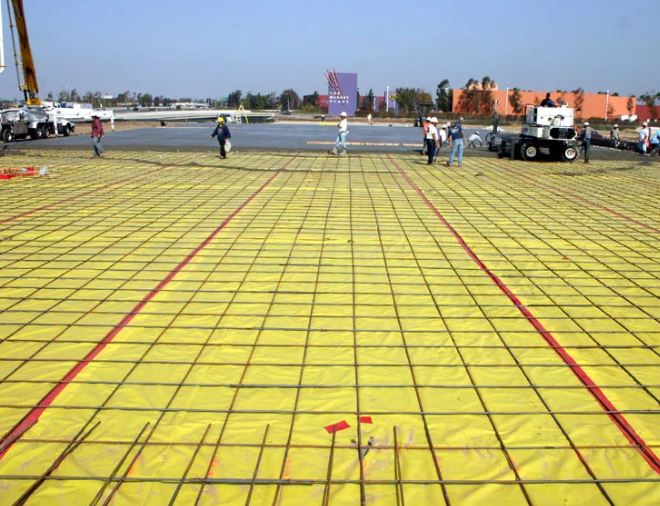
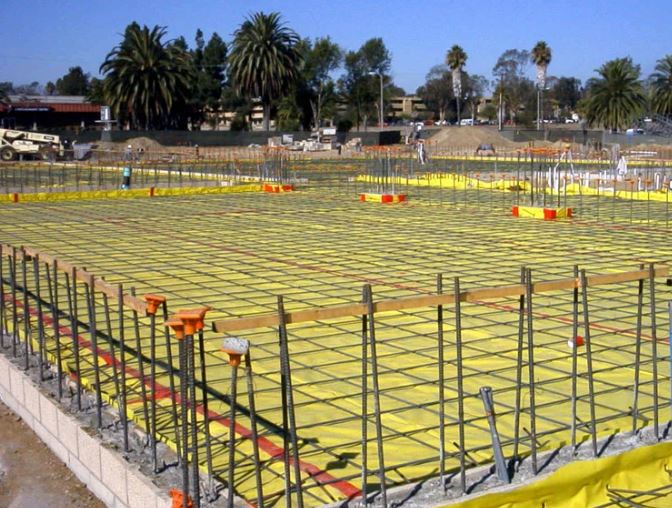
Installing a concrete vapor barrier beneath a slab
Photo: Vapor barrier placed directly beneath reinforcement before concrete placement.

Why vapor barriers belong directly under the slab

Modern best practices—and industry guidance such as ASTM E1745—support placing the vapor barrier directly beneath the concrete slab, not below the granular base. This minimizes the amount of moisture that can accumulate and be driven upward.

When vapor barriers are buried too deep, moisture can collect in the base layer, increasing the amount of vapor pressure pushing toward the slab.


Why Thickness Matters: Understanding 15 Mil Vapor Barriers

Vapor barriers are commonly specified by thickness, measured in mils (1 mil = 0.001 inch). Thicker barriers generally offer better durability, puncture resistance, and long-term performance during construction and service life.

Why 15 mil is often specified

  • Lower permeability: Helps restrict vapor transmission through the slab system.
  • Higher puncture resistance: Better suited for foot traffic, rebar, and equipment during placement.
  • Construction durability: Reduces risk of tears that compromise performance.
  • Compatibility with modern slabs: Especially important under conditioned buildings and finished floors.
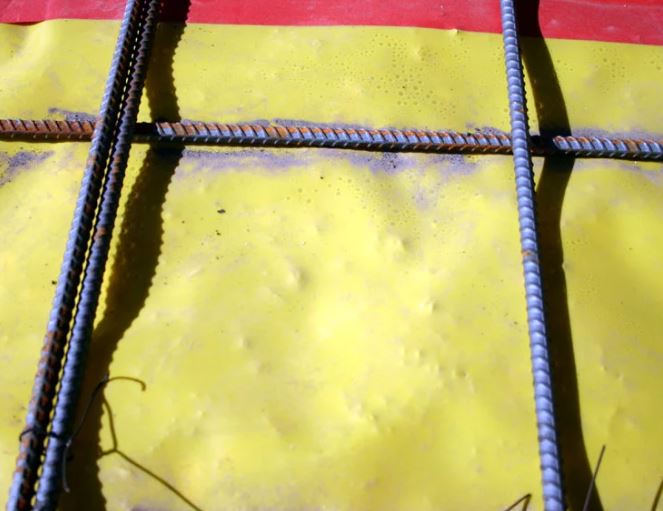
Workers installing a vapor barrier with taped seams
Photo: Seams taped and overlapped to maintain vapor continuity.

Seams, overlaps, and detailing matter

Even the best vapor barrier can fail if seams and penetrations are not handled correctly. Sheets should be overlapped according to manufacturer guidelines and sealed with compatible tape.

Around columns, footings, and penetrations, the barrier should be cut, wrapped, and sealed to maintain continuity across the entire slab footprint.


How to Install a Concrete Vapor Barrier Correctly

Installation quality is just as important as material selection. Below is a simplified, field-tested approach commonly used with 15 mil vapor barriers.

Typical installation steps

  1. Prepare and compact the subgrade and granular base.
  2. Unroll the vapor barrier directly over the base.
  3. Overlap seams per manufacturer requirements.
  4. Tape seams and repair any punctures immediately.
  5. Detail around penetrations and foundations.
  6. Place reinforcement and concrete with care to avoid damage.
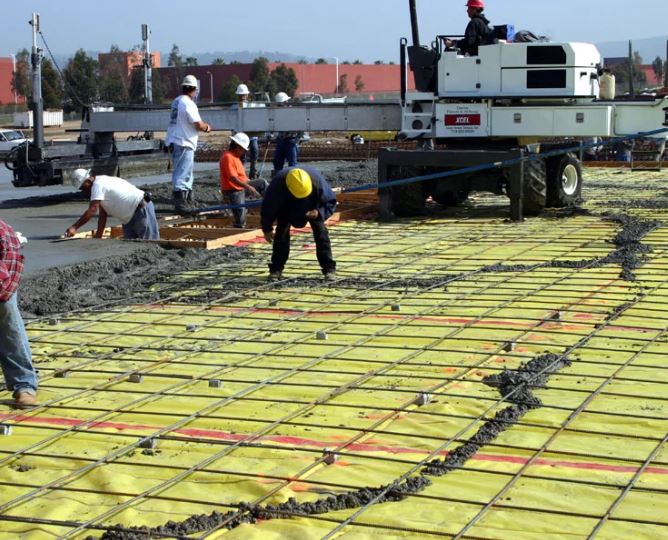
Workers installing Stego Wrap vapor barrier on a large slab
Photo: Large-scale slab installation using a 15 mil vapor barrier.

Common installation mistakes to avoid

  • Leaving unsealed seams or gaps
  • Puncturing the barrier and not repairing it
  • Placing the barrier too deep below the slab
  • Assuming thin plastic provides equivalent protection

Case Study: Commercial Slab Protected with a 15 Mil Vapor Barrier

Project: A light-commercial building with finished flooring planned throughout the space. Moisture-sensitive adhesives were specified, making vapor control critical.

Design challenge

The site had moderately moist soils, and long-term flooring performance was a priority. Thin poly sheeting was ruled out due to puncture risk and permeability concerns.

Solution

A 15 mil vapor barrier was installed directly beneath the slab, with all seams taped and penetrations carefully detailed. The heavier material allowed crews to work without excessive tearing during reinforcement placement.

Outcome

  • Concrete placement proceeded without barrier failures
  • Flooring installed on schedule with no moisture-related delays
  • No signs of vapor-related flooring distress observed after occupancy
Key takeaway: Investing in a robust vapor barrier helped reduce long-term risk and supported the performance of the finished floor system.

Concrete Vapor Barrier FAQ

Is a vapor barrier always required under concrete?
Not every slab requires one, but most conditioned buildings and slabs with finished flooring benefit from a vapor barrier to control moisture migration.
What is the difference between a vapor barrier and a vapor retarder?
The terms are often used interchangeably. Technically, a vapor barrier has very low permeability, while a vapor retarder allows limited vapor transmission.
Can a vapor barrier be damaged during construction?
Yes. That is why thicker materials, such as 15 mil barriers, are commonly specified—they are more resistant to punctures and jobsite abuse.
Should the vapor barrier go above or below the gravel base?
Current best practice typically places the vapor barrier directly beneath the slab, above the granular base, to limit moisture accumulation below the concrete.
How do I repair a puncture in a vapor barrier?
Clean the area and apply compatible tape or patch material recommended by the manufacturer to fully seal the damaged section.

Educational note: Always verify project requirements, local codes, and manufacturer installation guidelines when specifying or installing vapor barriers.